
All blogs
Partner Program – The 14 Steps to Build Your Reseller Channel Program
Learn how to create and build a professional reseller channel partner program to grow your business globally with help of partners.


(This article was originally published on Daniel Nilsson's blog.)
How can a reseller channel partner program help you?
Katrina Razavi, a business development professional, helped a B2B startup increase annual revenue by 1,983% and increase user base by 1,000% within six months…without any upfront costs.
Personally, I have helped a small startup in Sweden acquire 100 of the world’s biggest telecom operators as its customers.
How did we do this?
Yes, you guessed right. We attained success by developing a well-designed Channel Partner Reseller Program.
Channel Partner programs are so powerful that even multi-billion tech companies including Microsoft, VMWare, Oracle, eBay, Mailchimp, Shopify,Citrix and thousands of others use it.
Despite its huge success, creating successful partner programs isn’t a piece of cake. It takes time, effort, and most importantly, strategic planning. I have tried to make it simpler for you by introducing this 14-step process.
A well-designed partner program, is the formula to power your sales to legendary levels.
Like my other blog posts and presentations, this article is also based on my personal experiences and reviews from industry experts. I am sharing my conclusions here so that you don’t have to reinvent the wheel.
Overview
- What is a Channel Partner Program
- Before you start
- Step 1: Define a value proposition
- Step 2: Create a customer-centric sales process
- Step 3: Benchmark competitors
- Step 4: Define the type of partners
- Step 5: Success factors
- Step 6: Define motivation drivers and elements
- Step 7: Define the programmatic elements
- Step 8: Define responsibilities and expectations
- Step 9: Define a framework
- Step 10: Build internal capacities and systems
- Step 11: Define how to measure success
- Step 12: Develop a marketing strategy
- Step 13: Create a partner selection strategy
- Step 14: Build a focused partner organization
- 9 success factors for your partner reseller channel program
- 6 potential failure points
- Free tools
- More reading
- Conclusion
What is a Channel Partner Program?
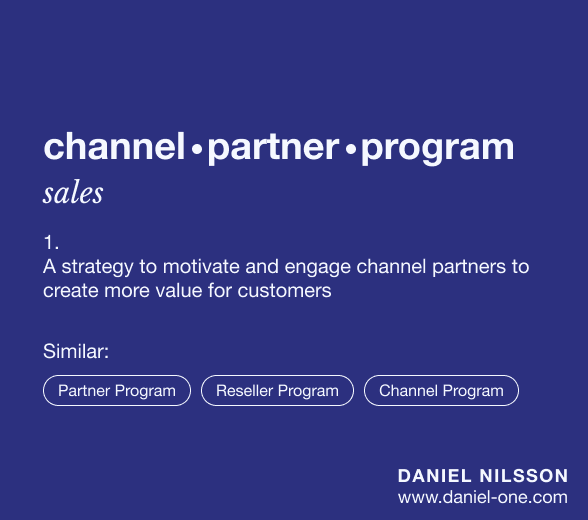
The definition of a channel partner program is: “A Channel Partner Program is a strategy to motivate and engage channel partners to create more value for customers.”
If you want to understand the definition in detail read my article by clicking here.
Before you start…
Business goals, vision, and executive support
Before you start developing your own Channel Partner Program, there are a few important factors you need to keep in mind: business goals, vision, and executive support.
Creating a professional reseller channel partner program is a big investment of time, effort, and resources. This is why it is essential that the partner program you want to create is aligned with the company strategy and business goals. This is also why it is essential to have executive support before you kick-off the process.

Now that you know what you need to take care of before you start, let’s go on to learn how to create your very own professional partner program.
Its Creation is Not a Straight Line
The creation of a Partner Program and Channel Sales is not a straight line. It’s a lovely mess that gets more clear and straight the more you study and develop it. If the world or your business changes suddenly, you may have to start over.

Step 1: Define a value proposition
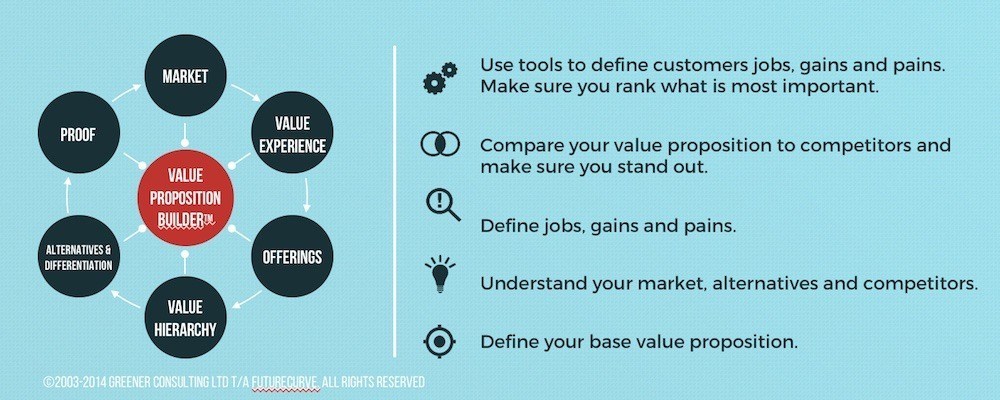
A solid value proposition automatically gives you an edge. It’s the number one thing to define because it will determine whether people will bother learning more about your solution, services, or product.
Defining a value proposition is about letting people know clearly what they will get out of using your product or service. You can use some tools to define customer gains, pain points, and rank what is more important for them. The next step is always to compare your value proposition with that of your competitors, what the market wants, and available alternatives. Once you have this data, you can define a solid base value proposition.
Personally I use Strategyzer's Value Proposition Canvas. It is a great tool to think deeply about customer jobs, gains they want and pains they have. When we understand the customer in detail we can better describe the value we provide in a way that the customer finds interesting.
If you want to learn more about value proposition design, check out my articletitled How to Create a Strong Value Proposition for B2B. I also recommend that you read How to create customer profiles / buyer personas for B2B Salesand How I Broke the Code for Advanced Value Proposition Creation Design.
When you and your prospect customers understand the value proposition clearly, it will be much easier for your channel partners to pitch your product or service to people.
Step 2: Create a customer-centric sales process
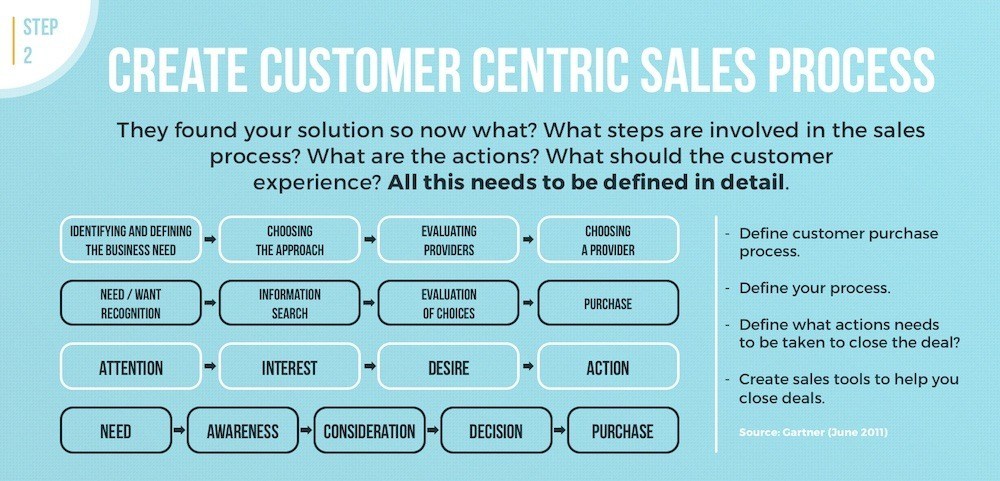
Customers now know about your solution. So now what? There’s still so much to do.
You need to understand the entire buyer journey for the customer and design a sales process. What steps are involved in the sales process? How many steps are there? What needs to be done at each stage of the sales process? All these questions need to be answered in detail.
But when you create the sales process, it is important that it is from the customer's perspective. It should be customer-centric.
Read my article How to Design a Sales Process for B2B Sales that explains how you can create a better sales process and improve your sales result.
Step 3: Benchmark competitors
Ever heard of the phrase, “Keep your friends close, and enemies closer.” You must apply it to yourself. Essentially, you need to understand what your competitors are doing.
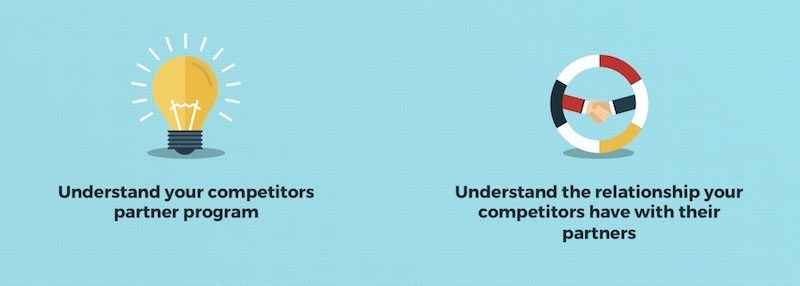
Try to get a deeper understanding of your competitors' partner programs. What is their target audience? How have they organized it? What benefits are they offering customers? What kind of relationships are they developing with their channel partners? How well is their channel program turning out? What is their structure for channel sales and channel partners?
This data will give you a lot of insights before you even begin offering your partner program and developing your channel sales. You will know what is working and what is not.
Step 4: Define the type of partners
The success of a partnership and channel sales lies in the value each party gets out of it. So your channel partnership largely depends on what value you are building for your customers.
For that, you need to identify and define the type of partners that may be relevant to your business and choose the best among them.
Do remember that a partner is any company or organization that can help you deliver more value to your customers.
Here are a few examples of channel partner types who might be relevant for your business:
- Value-added Resellers (VAR): A company that resells software, hardware, and/or networking products and provides value beyond order fulfilment.
- Managed service providers (MSP): A company that remotely manages a customer’s IT infrastructure and/or end-user systems, typically on a proactive basis and under a subscription model.
- Consultants: An experienced individual who is trained to analyze and advise a client in order to help the client make the best possible choices.
- System Integrators (SI): An individual or business that builds computing systems for clients by combining hardware and software products from multiple vendors.
- Original Equipment Manufacturers (OEM): A broad term whose meaning has evolved over time. In the past, OEM referred to the company that originally built a given product, which was then sold to other companies to rebrand and resell. Over time, however, the term is more frequently used to describe those companies in the business of rebranding a manufacturer’s products and selling them to end customers.
- Independent Software Vendors (ISV): Makes and sells software products that run on one or more computer hardware or operating system platforms.
- Distributors: A distributor is an intermediary entity between the producer of a product and another entity in the distribution channel or supply chains, such as a retailer, a value-added reseller (VAR) or a system integrator (SI).
- Agencies: This could be design agencies, marketing agencies etc. They are good channel partners for platform providers of web hosting, web sites and e-commerce sites.
Step 5: Success factors
You now understand the kind of sales process you must design and what type of channel partners will be the most suitable for your business. It is now important for you to understand what are the critical success factors that will enable your channel partners to close deals.
What are these critical factors? Is it a proof of concept? Good support? Pricing structure? Or efficient project management?
Make sure to list all success factors and then rank them in order of importance. Create a plan for each success factor. For example: If proof of concept is important, you must create a plan for how you will provide this to your channel partners. You will need to create instructions and processes and will also have to educate and train your partners on the subject.
In short, you need to create a framework that will ensure your channel partners understand what you have defined as critical success factors and are equipped to achieve them.
Step 6: Define motivation drivers and elements
Everything looks good. You have the right value proposition, sales process, channel partners and have defined critical success factors. But what will drive your channel partners to act on these success factors?
This is probably one of the most creative parts of all the 14 steps. Here, you need to think out of the box. Define what elements can motivate your channel partners and determine what actions you will need to take to help your channel partners become better at delivering key success factors.
Let’s say you have determined that 'proof of concept' is your key success factor. You will then need to educate and motivate your channel partners to convincingly demonstrate the proof of concept to customers. You could also show them how they can reap huge benefits if they do so.
From my experience, there are several motivators for channel partners. Below I list the six most important ones. For my complete list of motivators, do read my story: Channel Partner Programs & Channel Sales: 4 critical elements of success.
- Money: Many people think this is the primary motivator for channel partners. While this is a common motivator – after all, which company doesn’t want to make money – it is just one of many. You need to make sure that the effort your partner puts in corresponds to the revenue you offer them.
- Happy customers: When your customers are happy with your product or solution, they are likely to become repeat customers or recommend it to others. This is a great motivating factor for your channel partner (and you).
- Education programs: We all like it when people invest in us – be it in terms of money or resources. Many businesses develop really useful education programs for their partners, which act as great motivators. But do remember, developing good education programs requires a considerable investment of resources. So if you are taking the trouble to design these programs, make sure they are really good.
- Amazing sales tools: Giving your partners high quality sales tools of the kind you would give your own internal team is a sure shot way to motivate them because very few channel sales and partner programs offer great tools.
- Leads: Often, businesses get leads that they pass on to their channel partners. This acts as a great motivating factor too.
- Certifications: A badly implemented or maintained product or solution is terrible for the business – both for you and your partner. This is why you must ensure that your partner understands your product in and out and has the ability to problem-solve when required. Several businesses motivate their partners by offering them hardware and software certifications. Partners see this as proof that you are invested in their growth. Additionally, customers tend to trust partners who are ‘certified’ by the company (think Apple and Microsoft partners). This is a win-win for you and your partners.
There can be other secondary drivers as well. For example, pushed sales process focusing on extensive follow-up, lead nurturing, and closing deals. Or inspiration by delivering consistent marketing content focusing on inspiring partners.
Step 7: Define the programmatic elements
Programmatic elements to increase motivation and engagement refer to the effort and values you will deliver to channel partners to help them become successful. It also encompasses how you choose to deliver it.
The purpose of constructing programmatic elements is also to create a culture of partnership and understanding. It signals that you care about your channel partners and their success.
Here are a few examples of programmatic elements.
1) Education platform
If you’re into inbound marketing, you are likely to have heard of HubSpot, a developer and marketer of software products for inbound marketing, sales and customer service. HubSpot has implemented this strategy perfectly.
You can create an education platform that delivers education and knowledge to your channel partners in the form of text, video, papers, and certifications. Some businesses require their channel partners to complete partner certification to certify their knowledge level. Such certifications may also be important for partners to reach the next level in partnership hierarchy.
Having an education platform for channel partners is great for business because it ensures that your partners are as good as you are in selling your product or solution. When your partners reach out to leads, they will project a good image of your brand and your customers will experience a professionally-delivered sales process.
2) Development forum
For integration partners, it is important to have full access to a technology platform to create new solutions, improve, and manage current solutions. The development forum consists of manuals, APIs, technical documentation, support, and a forum where issues can be discussed in the open. Shopify is an example of a company that does this well. It has great resources for its tech partners.
3) Lead generation platform
The idea here is to distribute the leads generated among the channel partners.
Sometimes, small deals are better handled by channel partners that have efficient sales processes to handle small deals. At other times, some other channel partners may be better placed to deliver value to certain potential customers, increasing the likelihood of them closing the deal.
A lead generation platform allows you to manage all this without you having to put in much effort.
4) Support platforms for channel partners
Channel partners need to have full access to support manuals, instructions, videos, forums, etc. Customer support is identified as a key factor for success. It is important that the customer experiences excellent support during the proof of concept phase and after-sales phase to make sure that deals are not lost.
Step 8: Define responsibilities and expectations
You and your partners are a team. Now it is time to decide who is responsible for what. Focus on customer experience and define all activities and categorize them. The idea is to define roles clearly so everyone is on the same page and understands what part they will be playing in the sales process.

The first step is to define activities that need to be done. Try to make all these activities granular enough so they can all be assigned to either you or the partner. Also, make sure that you define expectations. What do you expect from channel partners and what can they expect from you?
Now when everything is clear, you can assign responsibilities to your channel partners as well as your own team.
Here are a few things that your partners can expect from you.
- Deliver pre-qualified leads
- Deliver professional & knowledgeable support during pre- and post-sales process.
- Deliver education programs that help the partner to understand the possibilities.
- Provide a certification program.
- Provide a best of breed solutions.
- Create events & programs that help partners to connect and start to build better solutions that provide more value for customers.
And here are a few things that you may expect from your partners.
- Channel partners will help you grow your business through sales and marketing activities.
- They must focus on the customer and deliver excellent solutions that deliver true value to the customer.
- They must be knowledgeable and constantly evolve with the market.
- They must attend events and connect with other partners with the intention to build improved and new solutions.
Step 9: Define a framework
Imagine how you categorize your friends – some are close, some are casual, then there are those whom you meet occasionally. Defining a framework is like that. It is about organizing your partner relationships.
Partner framework for SMB
If you are small organization and are about to create your first partner program, I strongly suggest you do not create official levels such as "bronze", "silver" and "gold" channel partners. This is because: 1. It's complicated to create and manage. 2. It costs time, money and resources. 3. It is complicated to explain. 4. For some SMBs, I have seen it creates sales issues.
Even if you have the capacity and resources to create such a complex framework, sometimes your channel partners may not have the internal resources to handle the various differentiations that being a "bronze", "silver" or "gold" partner entails. So just don't.
What you should do instead is to have an internal understanding about: 1. Who is your ideal partner 2. How do you understand and measure if your partner is performing.
This will help you to determine what channel partners you should focus on.
Partner framework for large organizations
Larger organizations have the resources and time to create a more complex partner framework. They can organise the framework in many different ways. It all depends on what works for them.
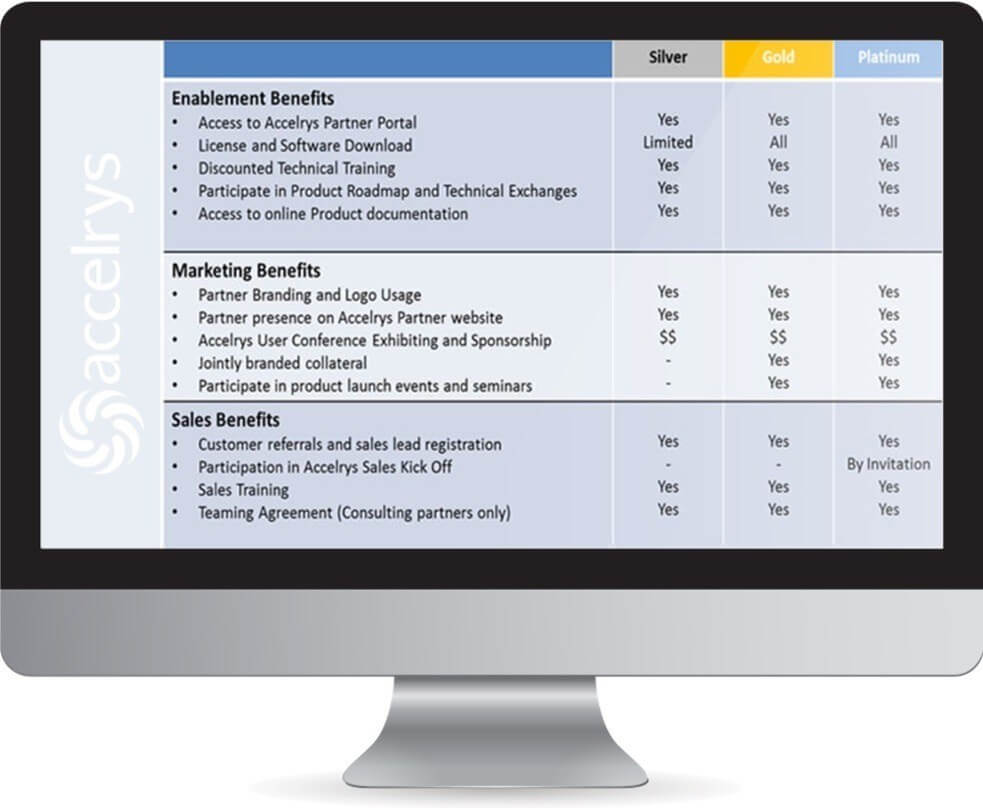
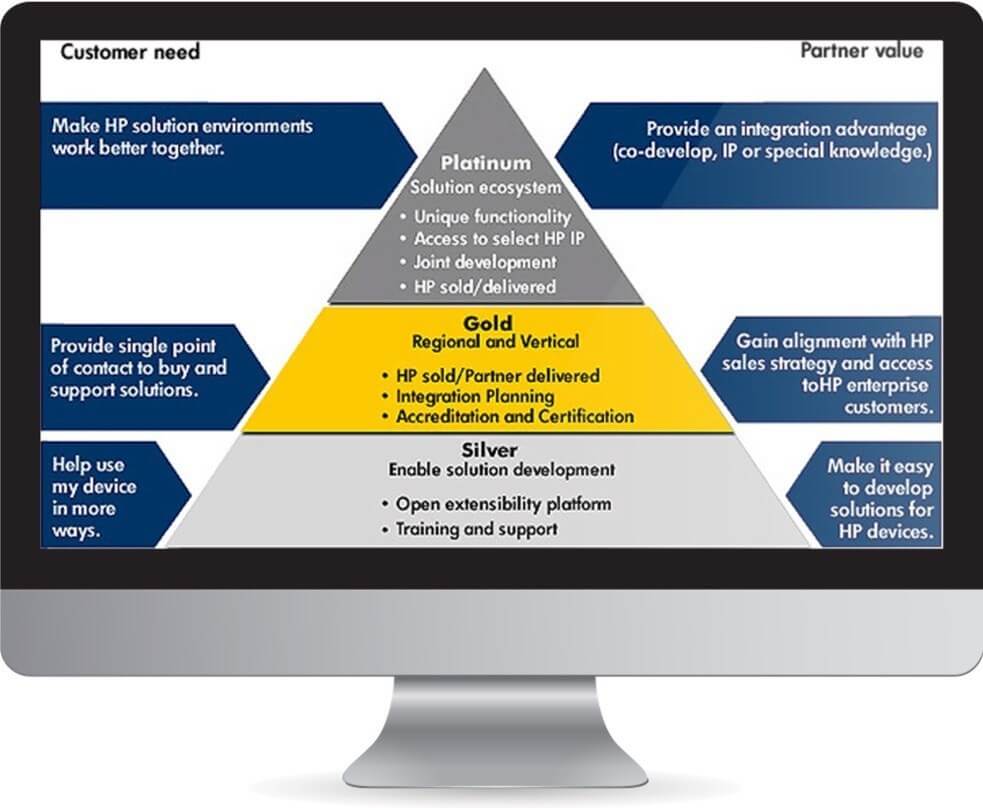
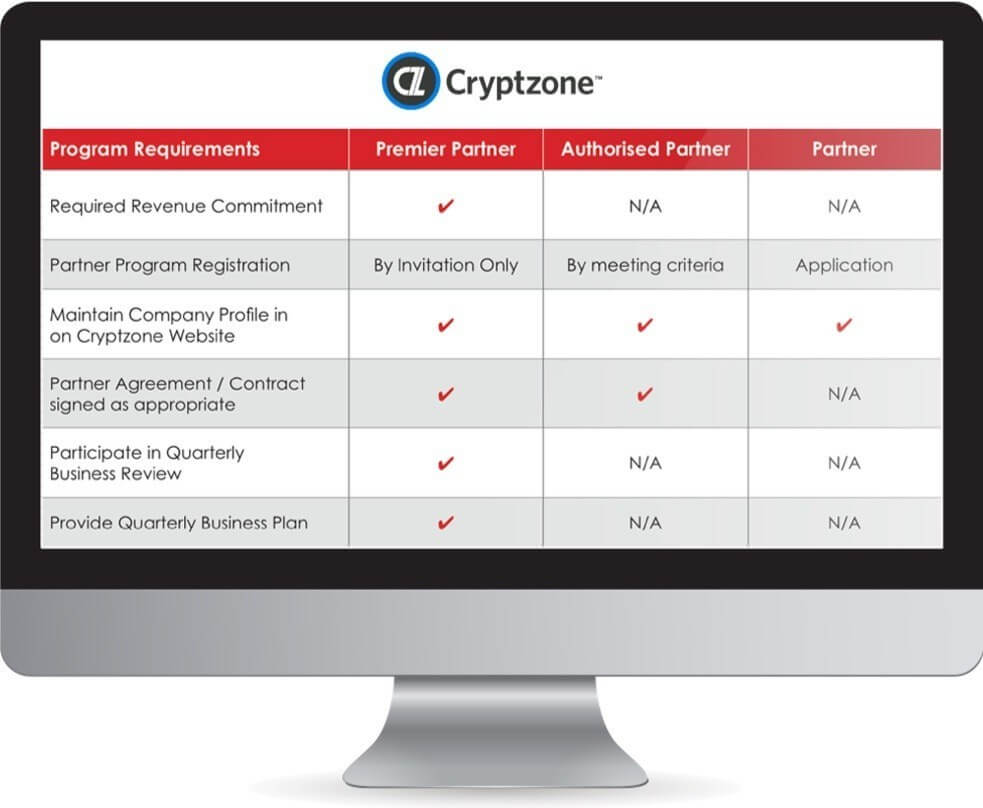
A good way to start is by defining partner program levels such as “bronze”, “silver” and “gold”. This framework helps organisations identify which partners are more involved in the partner program. These partners can then be given incentives. Some software companies, for instance, give their “gold”partners a lot of free software as a return on their investment in the partner program.
The different partner levels also work as motivation. By joining the education program and getting certified, the channel partner can achieve higher partner status and consequently, get more benefits.
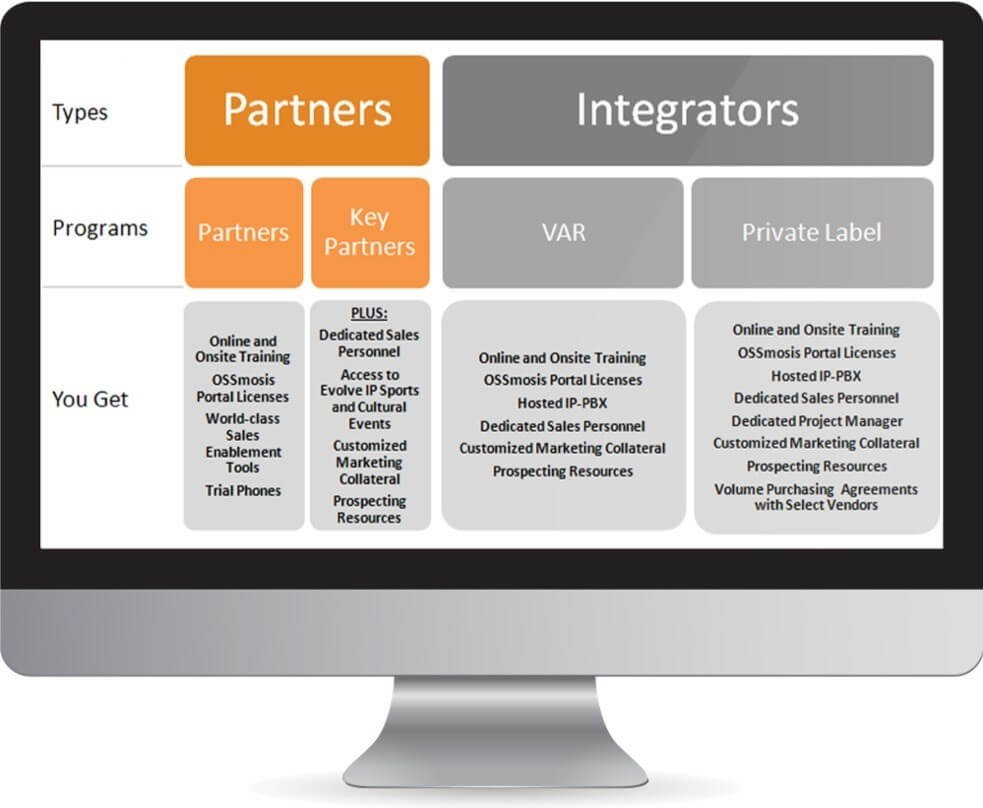
Here are a few examples of channel partner programs from Evolve, Accelerys, HP, and Cryptzone.
Step 10: Build internal capacities and systems
Now that you have everything strategized and planned for your reseller channel partner program, it is time to make it a reality. Start by creating a list of all those tasks and infrastructure you need in order to build and start executing your partner program.
Create all marketing materials ready including sales presentations, brochures, videos, and educational material. Also, implement IT systems that will give technical support to your partner program. This step is essential because it will help you in the long run when your partner list grows.
Here is a list of needs you might have in each aspect of your partner program.
1) About the program—general documentation
- Partner Program Operation Plan – Resources, time, organization chart, systems, sales.
- Legal agreements.
- Internal PowerPoint explaining the program.
- Account manager expectations on partners.
- Internal manual for the partner program.
- Information on how a channel partner can get pre-sales help and support.
- Information on how to manage leads and what is expected by channel partners.
- Partner selection matrix.
- Partner program roadmap presentation.
- Co-op fund structure.
2) Marketing
- Sales presentations that partners can use to sell your solution. If you want to learn how to create a sales presentation for channel partners click here.
- External sales PowerPoint to explain the program.
- Partner certificate.
- Training certificate.
- A two-page brochure explaining the partner program.
- Webpage where the partner program is explained and marketed.
- All marketing material that will enable partners to sell the solutions.
- Write specifications, select and implement IT-system for a partner portal were partners. can log in to get access to all material.
3) Education platform
- Create a specification for an IT-system that can host the education platform.
- Select IT-system and implement it.
- Establish training and certification curricula.
- Produce training material in the form of videos, presentations and text.
- Create tests so partners can certify their knowledge level.
4) Development forum
- Write specifications, select and implement a development forum in the partner portal.
- Make APIs available in the forum.
- Add manuals and instructions in the forum for how to use the API.
- Add examples of how to use the API in the forum.
- Add "Get Started" videos to the forum.

Apart from this, as mentioned earlier, you may need IT-systems to manage your channel partners. The best way, however, to do this is to integrate it into your current CRM system. And the best solution for this would be Salesforceand Microsoft Dynamics CRM.
For IT-systems to enable education management, I would recommend that you use Citrix GoToTraining or Learnster. There are other good solutions as well such as Mindflash, Articulate, and Coursio. For support systems, you could explore Front, Intercom and Salesforce.

Step 11: Define how to measure success
Whenever you have objectives, it is important to define the parameters that will decide whether you have achieved your objectives or not. Define the parameters of KPI (Key Performance Indicators) to measure your success.
Make sure what you define as KPIs are from the perspective of the success factors you had defined for your channel partners. Once you have decided what they are, make sure your IT support system calculates KPIs automatically.
Step 12: Develop a marketing strategy
This marketing strategy is for your partners. Use the SOSTAC model for this. You can find its template here. It is clear and easy to follow.
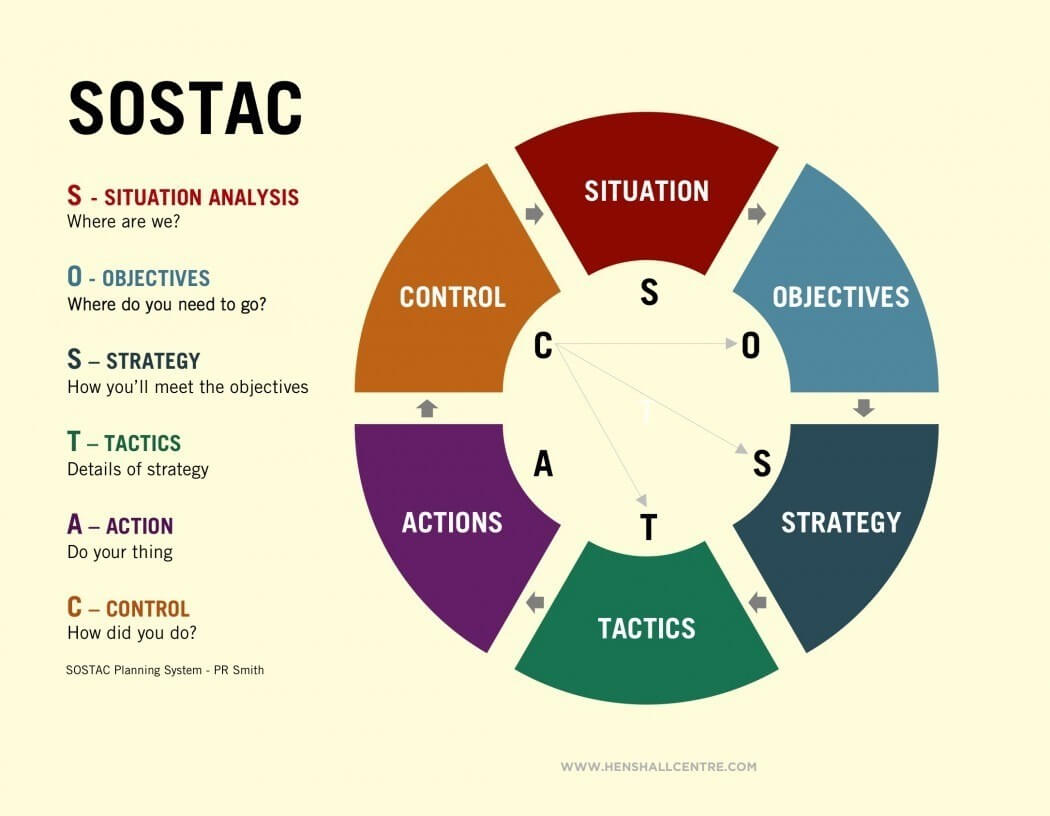
Create a clear target audience because that’s one of the most important things your channel partners need to understand. Use frameworks like RACE(Reach, Act, Convert, and Engage), 5S (Sell, Speak, Serve, Save, and Sizzle), and 5P (Product, People, Place, Price, and Promotion).
Step 13: Create a partner selection strategy
You should have a clear idea about who your target audience is for partners, just as you are clear about who you want as your customers. If you are not clear about this, you will waste time, money and effort on partners who cannot bring value to you or to your customers.
Each new relationship is an investment and it is important that you define characteristics or attributes of the ideal channel partner required to address a particular market segment. This will help you to decide what channel partners you would like to invest in and build a deeper relationship with. Define how many partners you should recruit and set a target.
You can do this easily by downloading my free channel partner selection matrix.

Step 14: Build a focused channel partner organization
Beyond systems, there is the human element to building a successful partner program. It is important that the structure of any partner organization is rooted in the philosophy that members of the partner team remain connected to many different internal organizations in order to deliver desired results.
Building, maintaining and growing a healthy channel ecosystem requires inputfrom all parts of an organization.
9 success factors for your reseller channel partner program
- Remember to keep the customer front and center: Every investment you make should, in the end, benefit the customer.
- Match your solution to the proper channel: This includes all your marketing material and information.
- Communicate often: Make sure that channel partners have all the information they need to become successful.
- Monitor and measure the program: There is always room for improvements.
- Resist making frequent changes: It takes at least 90 days after a contract is signed before you can expect to see any sales at all. Don’t change your program too often. Instead, focus on your program elements and how to deliver them even better.
- Be clear about what the channel partner should do: Make sure that your expectations are clear and that they are aligned with your partner's business model.
- Support channel partners before, during and after the sale: You can do this with technical and sales assistance to help them grow their business.
- Monitor your competitors: Your competitors will often be pitching to the same customers. So make sure you keep your partners educated & informed about anything your competitors may say about your product or solution and train them to rebut it.
- Launch and work with a partner council: This council will represent a cross-section of your channel partners and will help you to keep a finger on the pulse of your channel’s satisfaction levels.
6 potential failure points
- Once you have created your program you stop improving it: A successful partner program demands constant engagement and improvements.
- Lack of clarity: Make sure that you have truly defined what you want your channel partners to do, and that they are motivated enough to do it.
- Geographic diversity: Beyond the obvious differences between mature and emerging markets, there lie governmental, financial and cultural differences. Consider these when designing a first-time channel program.
- Investment in systems and resources: Without the appropriate allocation of resources, even the best program can’t come to life. While you can outsource some parts of the program, internal resources are still required.
- Diverse channel ecosystem: Each channel partner type has unique requirements, expectations, and perspectives. Be flexible with systems, programs & sales initiatives to maximize investments across a greater partner base.
- You have not signed up the right channel partners: The partner you have signed up fails because there is a mismatch between expectations and the partner's business model.
Example of how I built a hugely successful channel partner program
Read my article - How I built a hugely successful channel partner program and you can too (In-depth). It's a concrete example of how I built a partner program from scratch in 2015. The partner program was so successful that over three-and-a-half years, we recruited over 30 partners from all over the world who were instrumental in signing on over 100 of the world's biggest mobile operators as customers.
Free tools
Here are some free tools on my website that will make the process of creating a partner program easier.
- Channel partner selection matrix
- Example sales process
- Partner program elements
- To-Do list
- How to create an amazing sales presentation for channel partners
Creating a partner program is not a journey from A to Z. It is a continuous process. You must update your program from time-to-time so that it is in tune with market trends. The essence, however, lies in all the 14 steps that we have discussed. Keep coming back to each of them periodically and I am sure you will never be lost.
More reading
I constantly add articles and new insights. You have all my articles about channel partner programs collected here, and below you have some recommended reading.
- Channel Partner Programs & Channel Sales: 4 critical elements of success
- Sales presentations can make or break your channel partner program: An expert’s guide on how to get it right
- What is a channel partner program?
- How I built a hugely successful partner program and you can too (In-depth)
Conclusion
So, there you have it…14 steps to create a professional channel partner program. Please remember, an amazing partner program doesn't stop after these 14 steps. You need to continue to improve and innovate your channel program every quarter. The market, your competitors, your offering, and partners continuously innovate, and you need to make sure you keep up.




Drop us a message
Not sure what to write?
Tell us about your company, where you're from and how you would like to collaborate.

Design and build ambitious B2B digital products.
Visiting address:
Nordhemsgatan 56 | 413 09 | Göteborg | Sweden
Correspondence address:
🏢 Andra Långgatan 7A, 413 03 | Göteborg | Sweden


