Digital product projects

Selected projects

See all
How to Fix Design Debt in a SaaS Product
Design debt is what happens when a product is built faster than it is designed. It compounds quietly across inconsistent components, broken flows, and interfaces that confuse the users they're meant to serve — until it starts costing you deals you should be winning.
Over 12 years and 100+ digital products designed. Red Dot Award winners. Design experience rooted in MIT methodology.
Book a meetingDigital product projects
Selected projects
See all
Design debt has a precise meaning: it’s the gap between the interface you have and the interface your product needs to perform at the level your market now demands. It accumulates in specific ways — components built one-off rather than from a system, flows designed under sprint pressure that were never revisited, onboarding sequences mapped to an early user profile that no longer represents your buyer. Together, they create an experience that erodes trust at exactly the moments that matter most.
The mistake most teams make is treating design debt as a list of visual fixes. The right diagnostic starts at the system level: do you have a design system, and does your product actually conform to it? Are there flows where users reliably get stuck, drop off, or contact support? Is there a gap between how your product looks in sales demos and how it looks in day-to-day use? A structured design audit maps these problems with enough specificity to prioritise them by commercial impact.

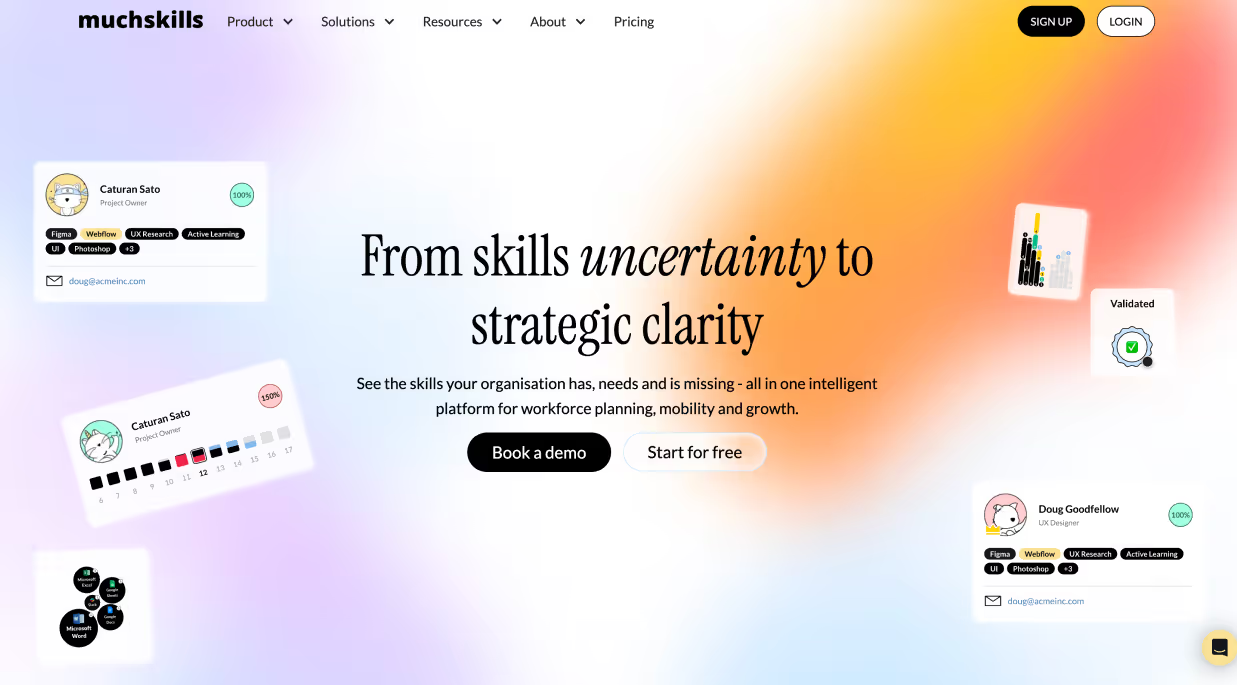
Design debt is best resolved in layers. The foundation is a design system — a shared component library and token architecture that makes every future decision consistent by default. On top of that, you address the highest-impact flows: onboarding, activation, the enterprise evaluation journey. The key is doing this in parallel with product development, not as a separate initiative that pauses shipping.





Up Strategy Lab has resolved design debt in more than 100 digital products. We know how to sequence the work so you see commercial improvement fast, without disrupting what's already shipping. Book a call to talk through what's accumulated in yours.
Book a meetingIf your SaaS product has accumulated design debt that's starting to affect deals or retention, let's map the highest-impact problems and figure out how to fix them.

Design and build ambitious B2B digital products.
Visiting address:
Nordhemsgatan 56 | 413 09 | Göteborg | Sweden
Correspondence address:
🏢 Andra Långgatan 7A, 413 03 | Göteborg | Sweden