How we work: the business first, the design after
We decode the business before we design anything. Every agency says that, so this page shows what it looks like in practice: workshops first, structure before surface, and staying until the work is in daily use.
We learned the order on our own product
We started in Gothenburg in 2018. Our first lesson came from something we built for ourselves: MuchSkills, which began as a spreadsheet prototype on a bootstrapped budget.
When the money is your own, you can't afford to polish something before you know what it's for. Our approach comes from that.
MuchSkills: Major Contender in Everest Group's PEAK Matrix 2026, rated 5.0 on Capterra, GetApp and Software Advice.
Structure before surface
Viking Analytics, Frontgrade Gaisler and CapillaryFlow work in three different industries but brought us nearly the same problem. Each had built something real, and the story, the website and the sales material around it had fallen behind.
The brief is where we start, not what we deliver
What a client asks for and what they need are often different things. Having that honest conversation early saves a quarter.
No design before the model
We won't open a design file until we understand how the business makes money and who signs off the purchase. A good interface on an unclear business just makes the confusion look better.
One story, not six suppliers
When positioning, product, website, sales material and partner channel are each fixed by a different supplier, they end up saying different things. We fix them together.
Five steps, always in this order
The order matters more than what we call each step. Each step ends with something your team can use.
Co-founders Daniel Nilsson and Noel Braganza run the work, alongside Yunan Xing on product design, Simon Svanberg on business design and Colleen Braganza on content strategy.
Our channel partner method has been used by more than 150,000 people worldwide, including teams at Canon and Tele2 IoT.
- 01
Listen
We ask about the business before we give any opinion on the design: your model, your industry, the pressures on your market. You get a shared, written view of the problem we are actually solving.
- 02
Workshops
We get the right people in one room and map the commercial picture: your best-fit customers in each segment, how they buy, what motivates them and what the brand needs to say to each. You get a map your sales team can recognise.
- 03
Define
We agree the outcomes and deliverables with you and write them down. You get a proposal with a real scope, and from there we move quickly.
- 04
Build
Brand, product design, website, content, and sales and partner material, depending on what the project needs. You get work made by the people who were in the workshops, so nothing is lost in a handover.
- 05
Stay
We stay through implementation and adoption. You get a system your team uses every day, not a file that gets archived.
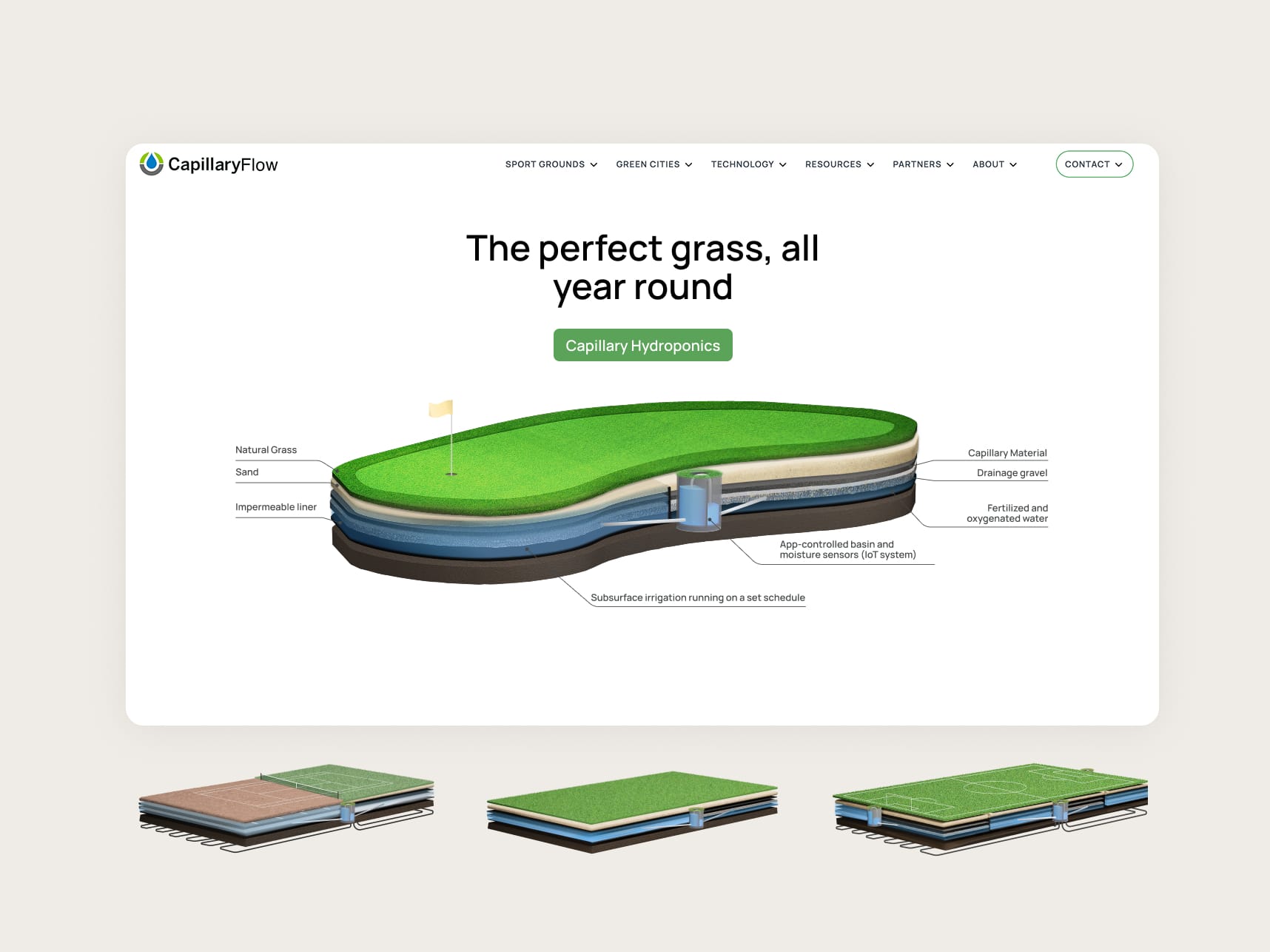
Capillary Concrete had one market in its name
The product had outgrown its name. The work that followed gave it a new one, CapillaryFlow, and built one website for four verticals rather than a separate effort for each.
777% more direct sales leads from the equestrian segment, year on year.
Design only counts once it's in use
We work alongside your in-house team and stay after launch. Design tokens, component libraries, documentation, portals and content structures are written so your team can carry on without us.
Launch day is the easy part to photograph. The part we care about is the Tuesday months later, when a developer opens the component library to build something we never planned for, and it just works.
- 70–90
Optimal Kommunikation had no web leads before 2019. Today the website brings in 70 to 90 qualified leads a month.
Start with a conversation, not a proposal
Most engagements start with a call where we ask more questions than we answer. If there's a fit, the next step is small and has a fixed scope.