HR software design that gets people logging in
For skills, learning and talent platforms. A leader signs the contract once, and employees decide every week whether to open it. We design for that weekly decision.
- Red Dot Design Award
- 40+B2B companies
- 5ventures built
- MITDesign Lab background

Adoption is the product
A platform nobody logs into produces no data. With no data, the dashboard your buyer paid for is empty at the first quarterly review, and that's where the renewal conversation starts.
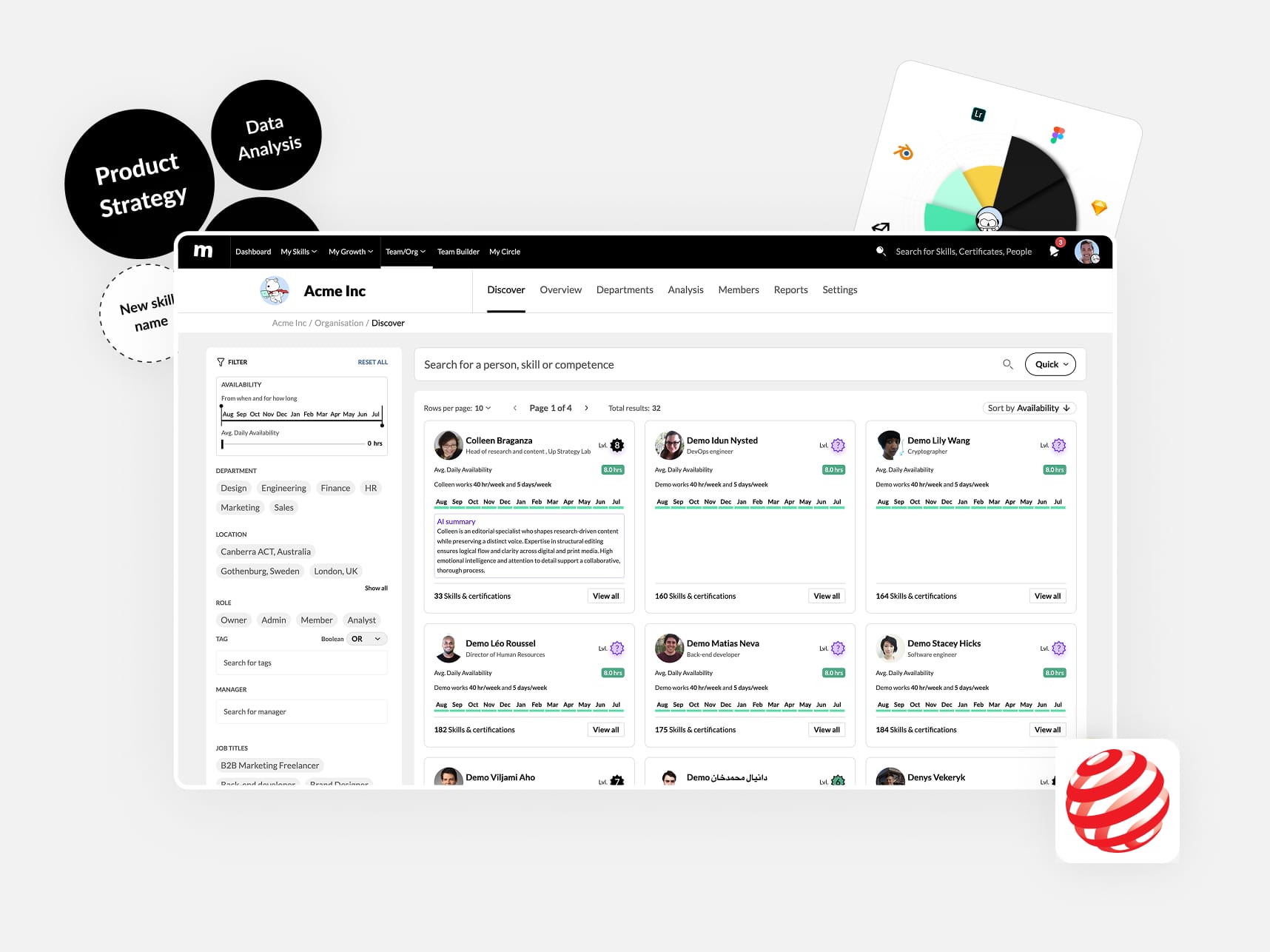
MuchSkillsKeep the complexity in the model
Proficiency levels, certifications, gaps and utilisation are complicated data. When the screen mirrors the schema, employees give up before they've entered anything.
Skills maps a leader can read alone
A whole team's proficiency, certifications and gaps on one visual map, so the question gets answered without an analyst in the room.
Short input, instant payback
Employees add a skill in a few light steps and see their own profile fill in straight away. That's what brings them back next week.
Tokens, components, documentation
A design system your developers keep, so the next feature looks like the last one without waiting for us.
One demo, four sets of worries
We write the positioning, website and demo story so each stakeholder finds their answer, and a category with no budget line of its own gets taught and sold in the same visit.
HR wants adoption
Evidence that people will still be using it a month after the launch email.
IT wants control
Security and data handling get checked before your feature list does. Much of that is a design and content job long before it's a compliance one.
Finance wants a number
A clear case for spending on skills or learning rather than the headcount it competes with.
Employees want reassurance
They want to know their manager won't use it against them. In much of Europe, a works council asks first.

We've paid for these trade-offs ourselves
MuchSkills: 5.0 on Capterra, GetApp and Software Advice, 4.5 on G2.
Read the MuchSkills case studyRelated work
What HR tech teams ask before they call

What experience does Up Strategy Lab have in HR technology?
Up Strategy Lab has built its own HR tech product as well as designing for clients in the category. MuchSkills, our skills platform, went from business case through product design, brand, build and go to market under our own roof. Co-founder Noel Braganza leads design, and the studio has worked from Gothenburg since 2018 with clients across Europe, the US and Asia.
How do you improve user adoption of an HR platform?
You improve adoption of an HR platform by designing for the employee who logs in, not only the leader who signs the contract. That means short input flows, a deliberate first-run experience and views that give people something useful back for their data. We test with employees as well as buyers, so adoption problems turn up before launch rather than at renewal.
Can you work alongside our in-house product and engineering team?
Yes. Up Strategy Lab works alongside in-house teams rather than replacing them, and stays through adoption after launch. You keep the design tokens, component library and documentation, so your developers can go on shipping consistent features after the engagement ends.
How long does an HR software design project take?
It depends on scope. Our published projects have run from one month (Lolo) to more than a year (CapillaryFlow and FreePower). A focused product or onboarding redesign sits at the shorter end. Product, brand, website and go to market together usually take several months, and we keep improving things after launch.
How do we start without committing a large budget?
Most HR software companies start with a review of the product and a prioritised list of what to fix first, before committing to anything bigger. Projects are priced to the scope and your budget; tell us what you have and we'll show what fits.
Find out why people aren't logging in
Two fixed weeks on your product, your onboarding and the story your site tells. You get a ranked list of what to fix first, before the next quarterly review does it for you.